
Introduction to Sone Ki Dua
In today’s busy world, the importance of a good night’s sleep cannot be overstated. Not only does sleep help with physical and mental restoration, but it also holds spiritual significance in Islam. One of the ways to ensure a peaceful and safe sleep is by reciting the Sone Ki Dua. The Sone Ki Dua, a supplication made before sleep, invites Allah’s blessings and protection, providing comfort, tranquility, and security for the individual as they rest.
In this article, we will explore the Sone Ki Dua ,” providing its authentic Arabic form and translations in Hindi, English, and Urdu. We will also delve into the importance of this dua in Islam, its benefits, and the Islamic references from the Quran and Hadith that support it.

What is Sone Ki Dua?
The Sone Ki Dua, also known as the dua before sleep, is a beautiful supplication recited by Muslims before going to bed. It is a way of seeking Allah’s protection and acknowledging His sovereignty over life and death.
Reciting this dua is a way to submit to Allah’s will before sleep, acknowledging that sleep is a temporary form of death, and asking for Allah’s protection from harm during the night. This dua is part of the Sunnah of Prophet Muhammad (PBUH), and by reciting it, we follow his example.
Sone Ki Dua in Arabic text:
Here is the Arabic text of the Sone Ki Dua:
اَللّٰھُمَّ بِاسْمِكَ أَمُوتُ وَأَحْيَا
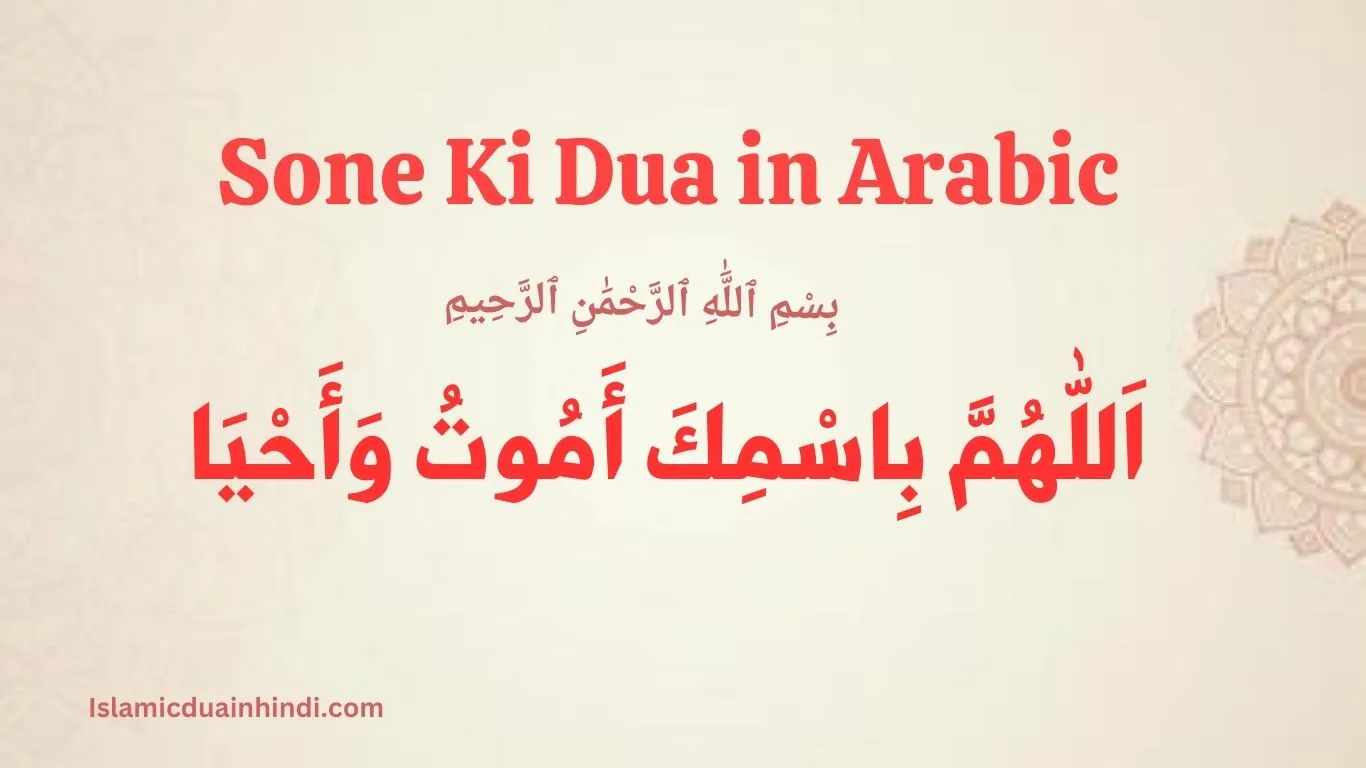
This dua is short yet profound, and it serves as a reminder of Allah’s complete control over life and death, making it a powerful supplication before sleep.
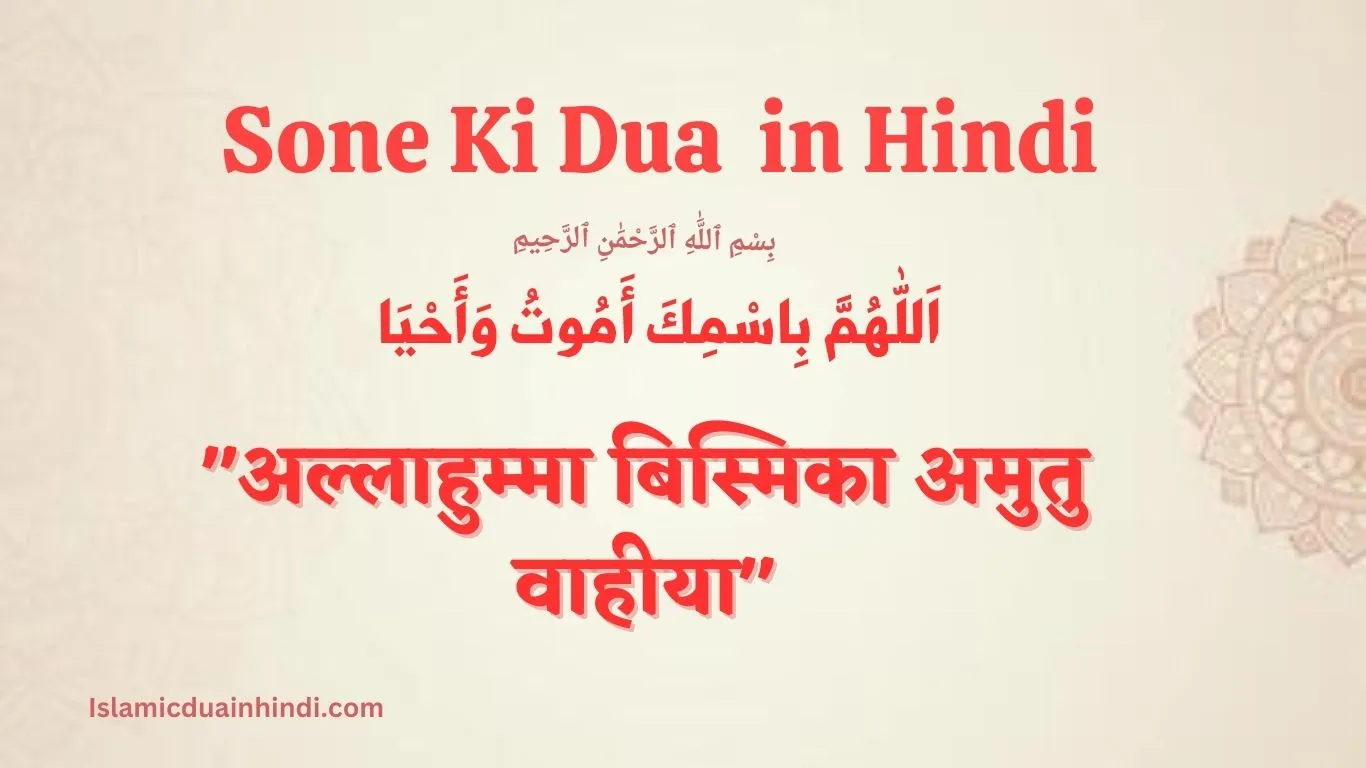
Sone Ki Dua in Hindi text:

Translation of the Dua in Hindi, English, and Urdu
To ensure that this dua is accessible to all, here are the translations in Hindi, English, and Urdu:
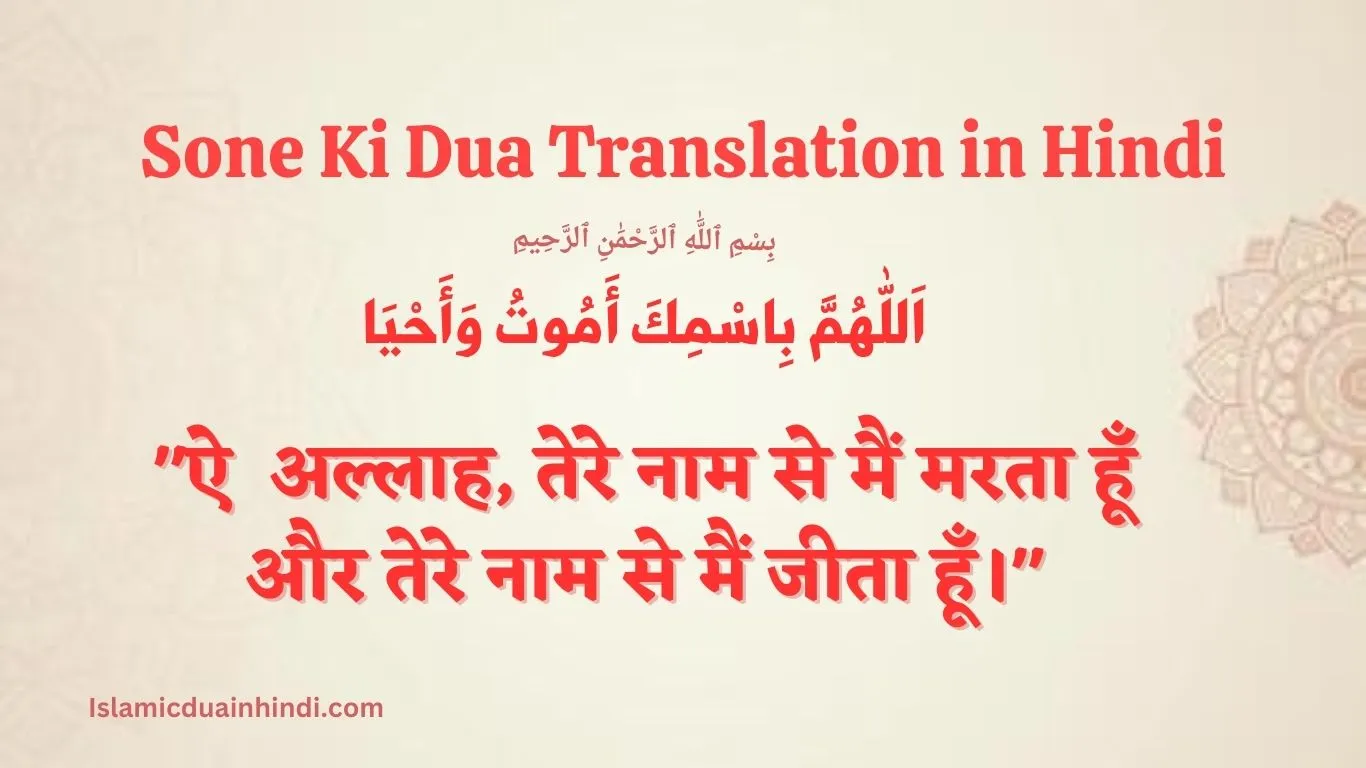
Sone Ki Dua Translation in Hindi:
“ऐ अल्लाह, तेरे नाम से मैं मरता हूँ और तेरे नाम से मैं जीता हूँ।”
Sone Ki Dua Translation in English:
“O Allah, in Your name I die and in Your name I live.”
translation
Sone Ki Dua Translation in Urdu:
“اے اللہ، تیرے نام سے میں مرتا ہوں اور تیرے نام سے میں جیتا ہوں۔”

you may also like:
Taraweeh ki Dua in Arabic with Hindi, Urdu, and English Translation

Explanation of the Dua
This dua reflects the Muslim’s total submission to Allah. Here’s a breakdown of its significance:
- Acknowledging Allah’s Control Over Life and Death: By saying “in Your name I die and in Your name I live,” a person recognizes that Allah has complete authority over their existence. Sleep is like a temporary death, and waking up is a return to life – both under Allah’s will.
- Seeking Protection: This dua seeks Allah’s protection during sleep, asking Him to keep the person safe from harm, nightmares, or any other negative influences that could affect them during the night.
- Trusting in Allah: Reciting this dua before sleep helps reinforce the trust in Allah. By surrendering to Him in this way, we show our reliance on His mercy and protection.
The Benefits of Reciting Sone Ki Dua
The Sone Ki Dua provides several spiritual and physical benefits:
- Protection from Harm: Reciting this dua before sleep ensures that you are under Allah’s protection throughout the night. It shields you from negative influences such as evil spirits, nightmares, or any disturbances.
- Spiritual Peace and Calm: The dua invokes tranquility, helping the individual feel at ease and allowing for a peaceful sleep, free of anxiety or worries.
- A Fulfilling Sunnah: Following the practice of Prophet Muhammad (PBUH), who used to recite this dua before going to bed, brings spiritual rewards. It strengthens your connection with Allah and brings blessings.
- A Reminder of Allah’s Control: The dua serves as a gentle reminder that our lives are in Allah’s hands, and that death and life are part of His divine plan. This reminder brings comfort and security.
- Mental Well-being: Trusting in Allah and seeking His protection through this dua can help reduce stress, anxiety, and other negative emotions that may affect sleep quality.
Islamic References from the Quran and Hadith on Sone Ki Dua
Quranic References
The Quran speaks about the fact that both life and death are in the hands of Allah. One such verse that emphasizes this is from Surah Al-Imran (3:156):
“It is Allah Who created the heavens and the earth, and when He decrees a matter, He only says to it, ‘Be,’ and it is.”
This verse reinforces that Allah has complete control over everything, including our sleep. By reciting Sone Ki Dua, we remind ourselves of His power and sovereignty.
Another relevant verse from Surah Az-Zumar (39:42) mentions the temporary nature of sleep, comparing it to death:
“It is Allah who takes the soul at the time of death, and those that do not die during their sleep. He keeps those for whom He has decreed death and sends the others back for an appointed term.”
This verse further highlights that sleep is a form of temporary death, and it is Allah who decides when we wake up and when we fall asleep.
Hadith References
The Prophet Muhammad (PBUH) regularly recited specific supplications before going to sleep. One of these duas is “اَللّٰھُمَّ بِاسْمِكَ أَمُوتُ وَأَحْيَا”. A Hadith from Sahih Bukhari narrates:
Narrated by Al-Bara’ ibn ‘Azib (RA):
“When you go to bed, say: ‘Allahumma Bismika Aamutu Wahiya’ (O Allah, in Your name I die and I live).’”
This Hadith confirms that reciting this dua was the practice of Prophet Muhammad (PBUH) and his companions, and it is highly recommended for Muslims to adopt this practice.
How to Recite Sone Ki Dua for Maximum Benefit
To gain the full benefit of the Sone Ki Dua, here are some steps you can follow:
- Be in a state of Wudu (Ablution): While not obligatory, it’s recommended to perform Wudu before reciting any prayer or dua.
- Recite the Dua with Sincerity: When you recite “اَللّٰھُمَّ بِاسْمِكَ أَمُوتُ وَأَحْيَا”, do so with full focus and sincerity, reflecting on its meaning.
- Repeat the Dua: You can recite it multiple times, especially if you are feeling anxious or stressed before sleeping. Repetition of the dua will help bring more tranquility.
- Start with Gratitude: Before reciting the dua, thank Allah for the day and ask for His forgiveness for any mistakes made during the day.
- Reflect on Allah’s Power: As you recite, think about the power of Allah over life and death and acknowledge your dependence on Him.
Call to Action:
If you found this article helpful, share it with your family and friends to spread the blessings of Sone Ki Dua. For more insightful Islamic content, make sure to subscribe to our blog and stay updated with the latest articles and guides.
read also:
The Most Powerful Dua for Success in Exams with Translations in English, Hindi, and Urdu

So Kar Uthne Ki Dua with translation in Hindi, English and Urdu
After a peaceful night of sleep, it is highly recommended in Islam to recite a special dua upon waking up. This dua is a way to thank Allah for returning the soul to the body and for granting another day of life.
So Kar Uthne Ki Dua in Arabic text:
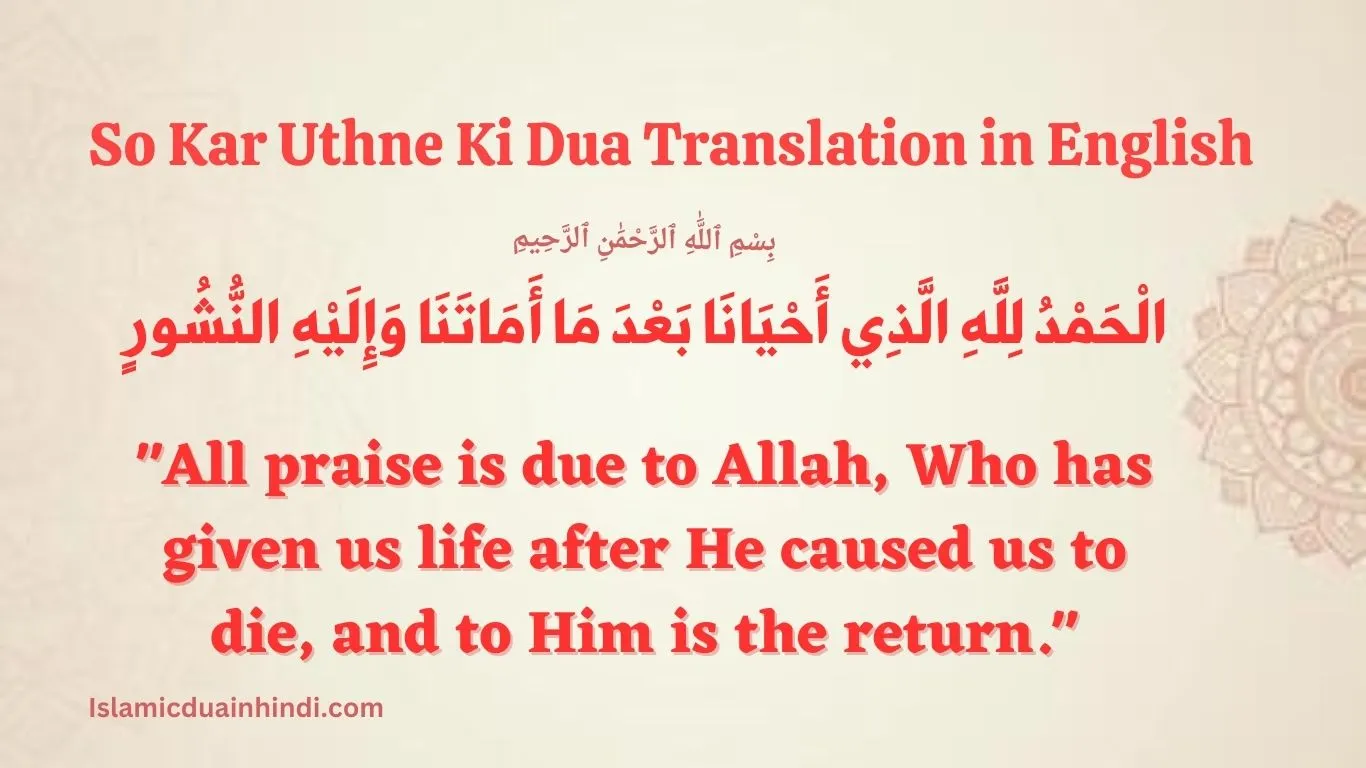
The Arabic text of the dua for waking up after sleep is:
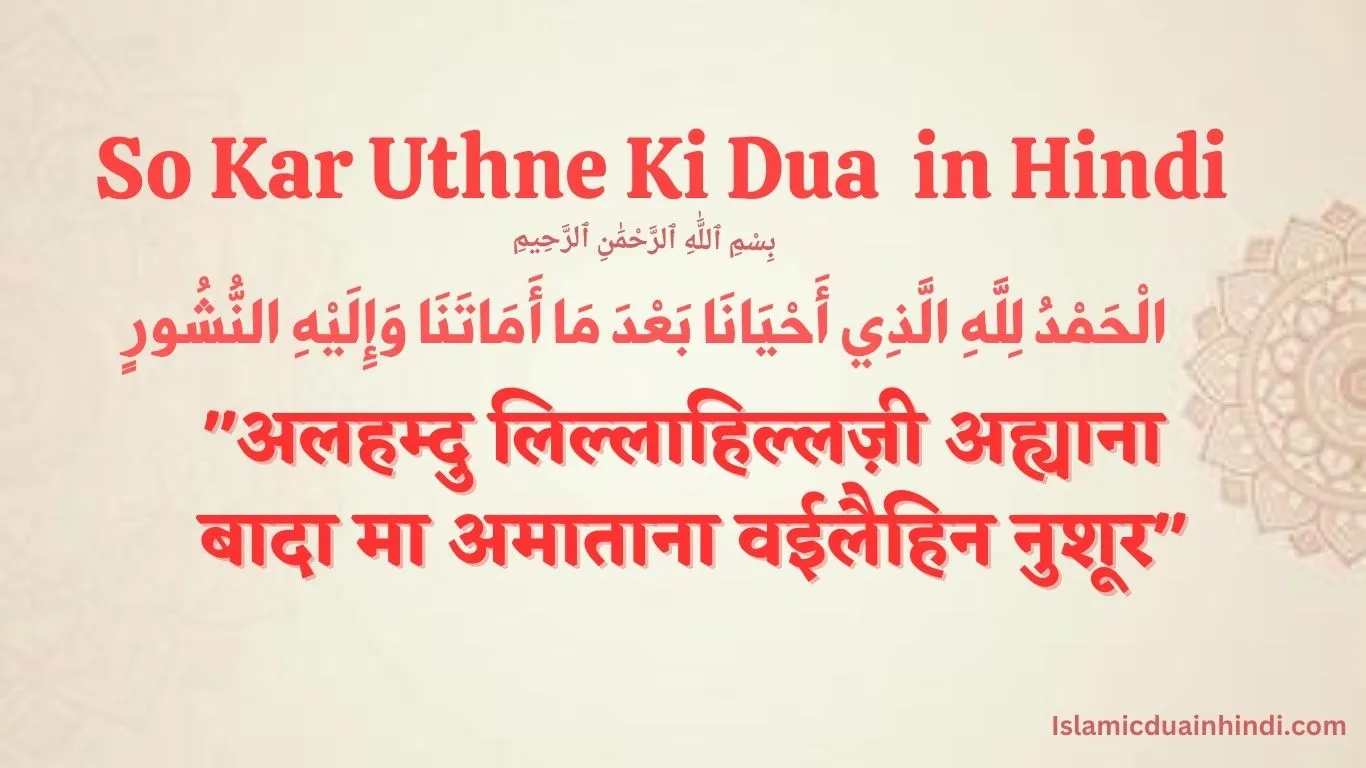
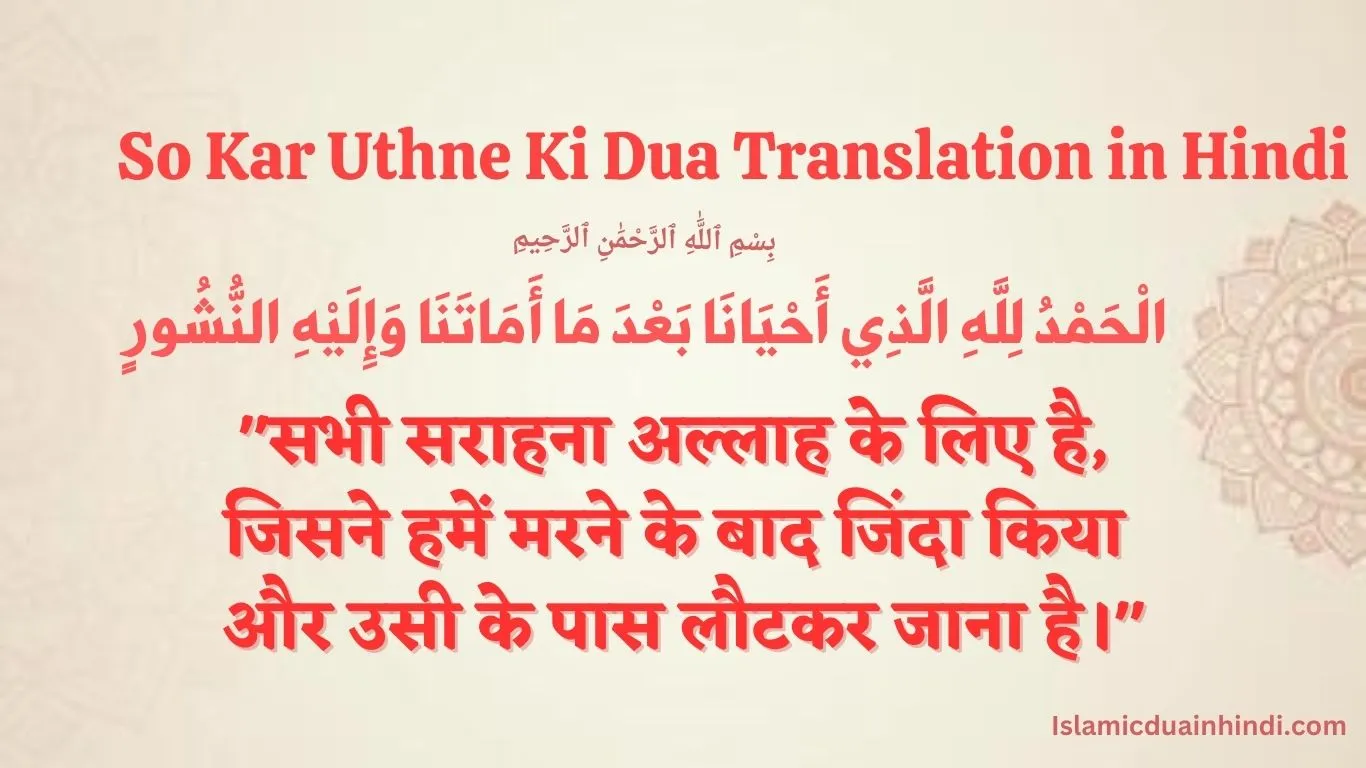
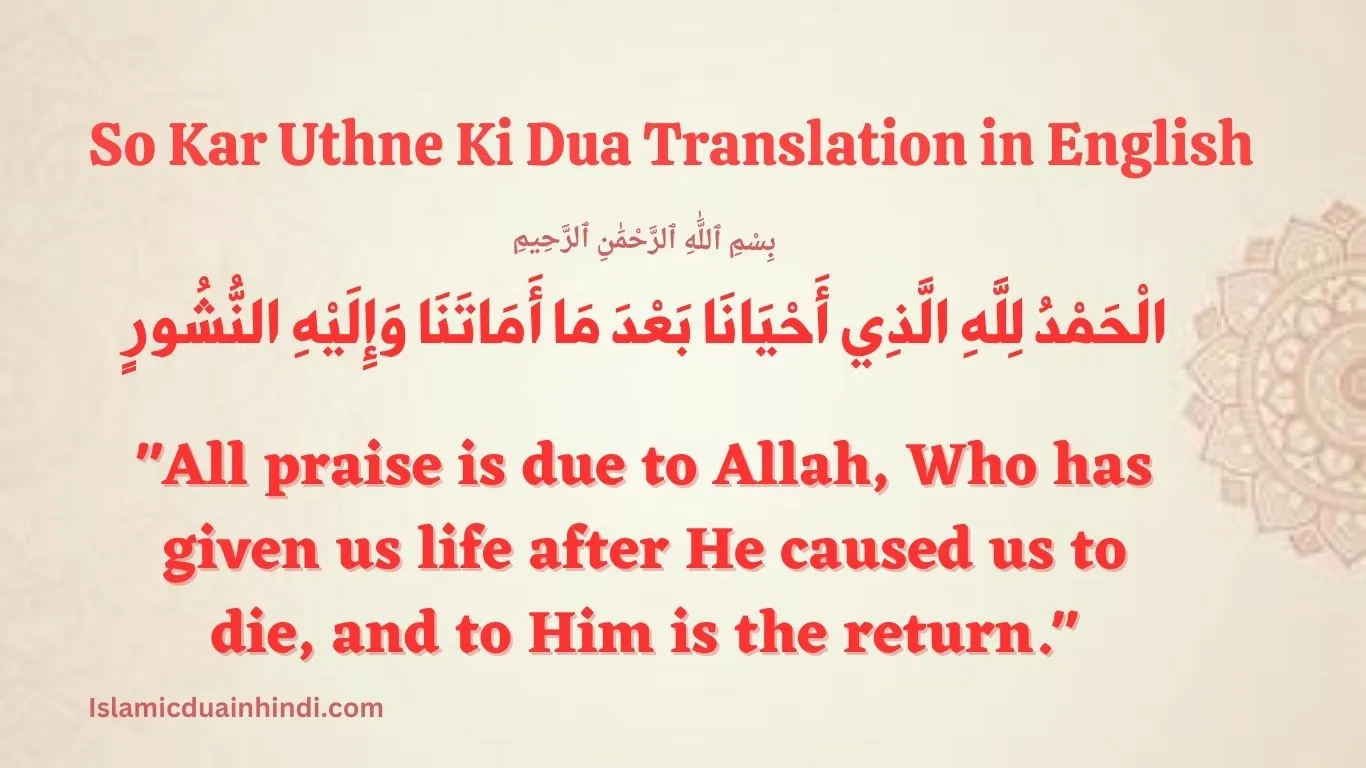
الْحَمْدُ لِلَّهِ الَّذِي أَحْيَانَا بَعْدَ مَا أَمَاتَنَا وَإِلَيْهِ النُّشُورٍ

So Kar Uthne Ki Dua in Hindi text:
“अलहम्दु लिल्लाहिल्लज़ी अह्याना बादा मा अमाताना वईलैहिन नुशूर”
So Kar Uthne Ki Dua in English text:
“Alhamdu lillahillazee ahyana ba’da ma amatana wa ilayhin-nushur”

Translation of So Kar Uthne Ki Dua
So Kar Uthne Ki Dua Translation in Hindi:
“सभी सराहना अल्लाह के लिए है, जिसने हमें मरने के बाद जिंदा किया और उसी के पास लौटकर जाना है।”
So Kar Uthne Ki Dua Translation in English:
“All praise is due to Allah, Who has given us life after He caused us to die, and to Him is the return.”
So Kar Uthne Ki Dua Translation in Urdu:
“تمام تعریف اللہ کے لیے ہے، جس نے ہمیں موت کے بعد زندہ کیا اور اسی کی طرف واپس جانا ہے۔”

Islamic Reference for So Kar Uthne Ki Dua
The dua for waking up after sleep is mentioned in various authentic Hadiths. One such narration from Sahih Bukhari is:
Narrated by Abu Huraira (RA):
“When any one of you wakes up from his sleep, he should say: ‘Alhamdulillah alladhi ahyana ba’da ma amatana wa ilayhin-nushur’ (All praise is for Allah, Who has revived us after He caused us to die, and to Him is the return).” (Sahih Bukhari)
This supplication is a reminder of the temporary nature of life and sleep, and the ultimate return to Allah. It expresses gratitude for being granted another day of life and serves as a reminder of Allah’s mercy and power.
How to Recite Sone Ki Dua and So Kar Uthne Ki Dua for Maximum Benefit
To gain the full benefit of the Sone Ki Dua and So Kar Uthne Ki Dua, follow these simple steps:
- Recite with sincerity: Whether you are saying the dua before sleep or upon waking up, always do so with a heart full of faith and trust in Allah.
- Be in a state of purity: While not mandatory, it is highly recommended to perform Wudu (ablution) before reciting any duas or prayers.
- Reflect on the meaning: When reciting the duas, think deeply about the meanings behind them and acknowledge Allah’s power over life and death.
- Start your day with gratitude: Upon waking up, thank Allah for the new day, and after going to bed, ask for His protection.
Conclusion
The Sone Ki Dua and So Kar Uthne Ki Dua are essential supplications that provide both spiritual and physical benefits. By reciting “اَللّٰھُمَّ بِاسْمِكَ أَمُوتُ وَأَحْيَا” before sleep and “الْحَمْدُ لِلَّهِ الَّذِي أَحْيَانَا بَعْدَ مَا أَمَاتَنَا وَإِلَيْهِ النُّشُورٍ” upon waking, Muslims submit to Allah’s will, seek His protection, and express gratitude for the gift of life. These duas are part of the Sunnah of Prophet Muhammad (PBUH) and offer us an opportunity to grow spiritually while ensuring peace of mind.
Call to Action:
If you found this article beneficial, share it with your family and friends to spread the blessings of these duas. For more insightful Islamic content, make sure to subscribe to our blog and stay updated with the latest articles and guides.
Note: “If you find any mistakes in the Arabic dua or its translations, please inform us. Insha Allah, the mistake will be corrected as soon as possible.”
Dua e masura in English, Hindi and Urdu with Beautiful images

for more post please visit our website islamicduainhindi.com